 ultimate-guide
Security Guard Jobs Denver Requirements 2026: Your Complete Licensing Guide
Last Updated: November 6, 2026
Quick Summary
To qualify for security guard jobs Denver in 2026, you need a valid license: complete a 16-hour training course, submit fingerprints for a background check, and file your application. Get licensed before applying, since many Denver employers screen out unlicensed applicants before reading resumes.
- Colorado regulates guards at the state level, and Denver may add its own municipal licensing layer.
- Unarmed posts need the basic license; armed roles also require a concealed handgun permit and firearms training.
- The 16-hour course can be finished in 1-2 days, but background review takes several weeks.
- Apply to overnight, weekend, and construction posts first, where new guards get hired fastest.
- Bring your license card, training certificate, and ID to every interview to get hired faster.
Table of Contents
- Denver Security Guard Jobs in 2026: What the Market Looks Like
- Denver Security Guard License Requirements: The Full Checklist
- Minimum Age, Education, and Physical Requirements
- Armed vs. Unarmed Security Jobs in Denver
- Security Guard Training Denver: What the 16-Hour Course Covers
- Security Jobs Denver No Experience: How to Break In
- Unarmed Security Jobs Denver: Pay, Shifts, and Where to Apply
- Cost and Timeline: How Long Until You're Job-Ready
- Application and Interview Prep for Denver Security Roles
- Enroll in Your Denver Licensing Course and Start Applying
- Frequently Asked Questions
Denver Security Guard Jobs in 2026: What the Market Looks Like
Security guard jobs Denver in 2026 reward people who get licensed before they start applying, not after. Employers in the metro area hire continuously for unarmed roles at office towers, hospitals, retail centers, and construction sites, and most of those postings share one hard filter: a valid Denver security license. This guide walks through every requirement, from age and background checks to the 16-hour training course, so you can move from applicant to hired without wasted weeks.
The market itself is steady rather than glamorous. Security services remain one of the few entry-level fields where a high school diploma, a clean background, and a completed licensing course are enough to get a first interview. Shift availability drives hiring more than anything else. Guards who will take overnight, weekend, or rotating posts get called back fastest, and full-time openings often go to candidates who can start immediately.
What most guides get wrong is the order of operations. People apply to ten jobs, hear nothing back, and assume the market is closed. In practice, many Denver employers screen out unlicensed applicants before a human ever reads the resume. Get the license first and the same applications suddenly get responses.
Below, we break down exactly what Denver requires, what it costs in time, and how to line up work once your permit is in hand.
Denver Security Guard License Requirements: The Full Checklist
Denver security guard license requirements come down to a short list: minimum age, a clean background check, fingerprinting, and completion of a 16-hour training course. Colorado regulates security guards at the state level, and the City of Denver may add its own licensing layer for guards working within city limits. Confirm current requirements with the relevant agencies before you apply.
Here is a practical checklist to review before you apply:
- Confirm you meet the minimum age requirement for the license type
- Obtain a high school diploma or GED
- Complete the 16-hour basic security training course
- Submit fingerprints for a background check
- Pass the criminal history review
- File the license application with the correct authority
- Carry your license card on every shift
The exact forms, fees, and processing times change, so verify current figures with the Colorado Division of Professions and Occupations and the City of Denver's licensing office before you submit anything. Check the official page the week you apply, not the week you started researching.
City License vs. Colorado Statewide Registration
Denver sits inside a state framework, and this trips up many applicants. Colorado issues security guard licensing through its professional licensing division, which covers the legal baseline for working as a guard. Denver may add municipal requirements on top for guards operating inside the city; confirm them with the city's licensing office.
The distinction matters because a guard licensed only at one level can run into trouble taking certain posts. If you plan to work downtown, at Denver International Airport, or at city-contracted venues, confirm both layers are satisfied. Guards who intend to work only in surrounding suburbs should still check whether their employer requires the state license alone or both.
A simple way to keep the two layers straight: treat the state credential as the baseline that lets you work as a guard anywhere in Colorado, and treat the Denver city license as the local add-on that lets you take posts inside city limits. When a job posting says "must be Denver licensed," it is usually asking for the city layer specifically, even if the state credential is also listed. Ask the hiring contact which credential they verify at onboarding, and get the answer in writing so there is no surprise on your first day.
Background Checks and Disqualifiers
A criminal background check is mandatory, and fingerprinting is part of the process. Disqualifiers typically include felony convictions, certain violent misdemeanors, and any pending charges that suggest a risk to public safety. The review looks at the nature of the offense, how recent it was, and whether it relates to the duties of a security officer.
Applicants with old or minor offenses should not assume they are out. The review is individualized, and documentation of rehabilitation, completion of sentences, and steady employment history can matter. Gather court records and disposition paperwork before you apply so nothing delays the file.
Documents to Have Ready Before You Apply
Missing paperwork is a common cause of a stalled application. Before you file, gather government-issued photo ID, your high school diploma or GED documentation, your 16-hour training certificate, fingerprint receipt, and any court disposition records for past offenses. Keep digital scans and paper copies.
Watch out: submitting an application with an expired ID or a training certificate that does not match the name on your other documents can cause a file to be returned for correction.
Renewal and Continuing Obligations
A license is not a one-time purchase. Licenses are generally subject to renewal requirements and continuing training hours, so check the official renewal rules for your credential. Put the renewal date on your calendar the day the license arrives, and complete continuing hours well before the deadline. Employers verify current status at hire and often at random afterward, so an expired card can cost you a post even if you are otherwise qualified.
Minimum Age, Education, and Physical Requirements
Check the current minimum age and education requirements with the relevant licensing authority before you apply. Those two requirements eliminate more applicants than the background check does, mostly because people apply before they have the diploma in hand or assume a GED is a barrier.
Physical requirements are set by employers rather than the license itself, but they are real. Most Denver security jobs involve standing or walking for full shifts, climbing stairs, patrolling parking structures, and responding quickly to incidents. Posts at construction sites and industrial yards often require outdoor work in all weather.
Customer service ability is often valued by employers. Many Denver security roles involve hospitality and guest-facing duties, where guards direct visitors and de-escalate conflicts. If you can stay calm and speak clearly under pressure, say so in the interview and give an example.
Armed vs. Unarmed Security Jobs in Denver
Armed and unarmed security jobs in Denver carry different requirements. Unarmed guard positions require the basic license and training. Armed positions require all of that plus a valid concealed handgun permit, firearms training, and often additional employer-specific qualification shoots.
Armed roles can narrow your options, and some employers do not place armed guards at all. Starting unarmed gets you hired faster, builds the experience hours that armed postings list as a prerequisite, and lets you decide later whether the pay difference justifies the extra licensing and liability.
| Requirement | Unarmed Guard | Armed Guard |
|---|---|---|
| Basic security license | Required | Required |
| 16-hour training course | Required | Required |
| Concealed handgun permit | Not required | Required |
| Firearms qualification | Not required | Required, often annually |
| Typical starting post | Retail, office, hospitality | Banking, high-value sites |
| Hiring speed | Faster | Slower, more screening |
One caution for anyone considering armed work: the legal and insurance exposure is meaningfully higher, and employers screen armed applicants more carefully. Build a clean work history first.
Security Guard Training Denver: What the 16-Hour Course Covers
Security guard training in Denver generally involves a 16-hour basic course before licensure. Confirm the current curriculum and training requirements with the relevant licensing authority.
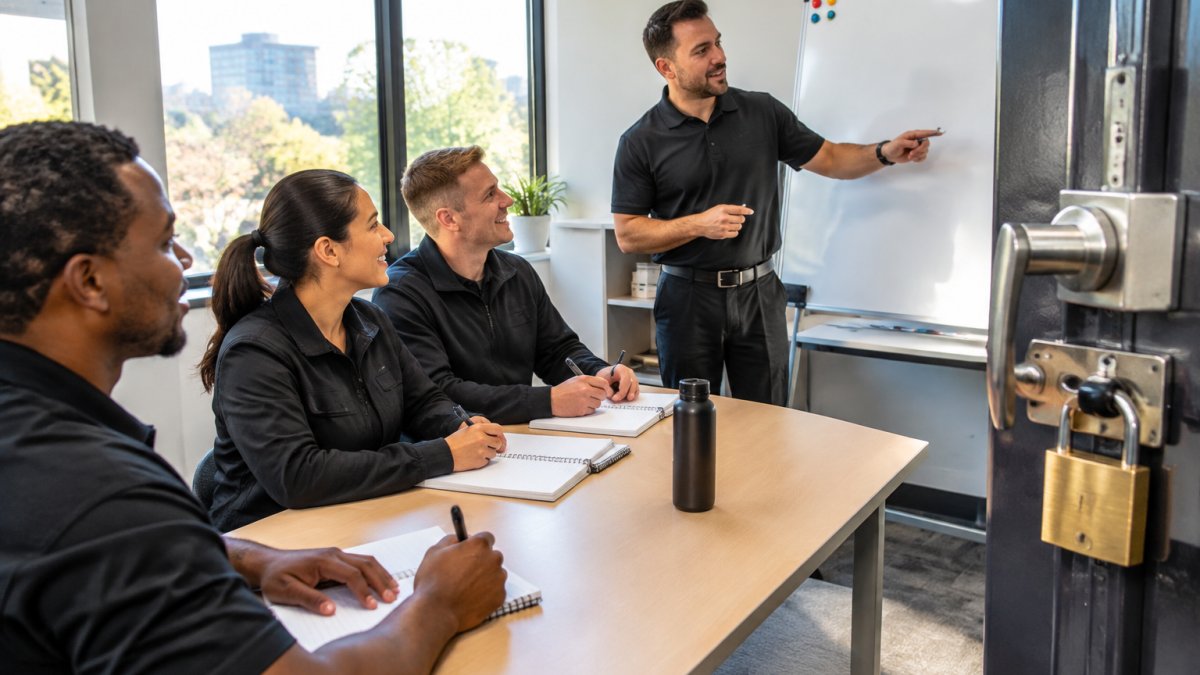
At Urban Security & Protection Group, the course uses a game-based format with Scramble, Jeopardy, Match, and Wheel of Fortune rounds to help students retain the material.
Flexibility matters as much as the format. The course is available in English and Spanish, and classes start when the student is ready.
Security Jobs Denver No Experience: How to Break In
Security guard jobs Denver with no experience are genuinely available, and the entry path is shorter than in most fields. Employers hiring entry-level guards expect to train you on their site procedures. What they will not do is pay for your license or wait for you to finish the course, which is why completing training first is the single fastest way to convert applications into interviews.
Here is the sequence we recommend to first-time applicants:
- Confirm you meet the age and education requirements
- Complete the 16-hour training course and pass the exam
- Submit fingerprints and the license application
- Build a one-page resume that names the license and its status
- Apply to unarmed posts first, including overnight and weekend shifts
- Take a part-time or flex post to accumulate experience hours
- Apply to higher-paying sites after six months of clean work history
A common mistake is applying only to the visible, desirable posts: downtown lobbies, hospital day shifts, corporate campuses. The overnight construction site and the weekend retail post are where new guards get hired, and they are where the experience comes from.
Unarmed Security Jobs Denver: Pay, Shifts, and Where to Apply
Unarmed security jobs in Denver cluster around a few employer types: contract security firms, property management companies, hospitals and healthcare systems, retail chains, event venues, and construction contractors. Each hires differently. Contract firms hire in volume and place you wherever they have a gap. In-house employers hire slowly but offer more stable schedules.
Hourly pay varies by post, shift, and experience, and we recommend checking current listings directly rather than trusting any single published range. Overnight and weekend differentials are common. Armed posts and posts requiring a concealed handgun permit pay more, as do sites with high liability, such as banks and jewelry districts.
Shift availability is the strongest lever you control. Guards who accept rotating schedules and short-notice coverage get placed fastest and get offered the better posts once they have proven reliable. If your availability is limited to weekday days, expect a longer search.
Cost and Timeline: How Long Until You're Job-Ready
Becoming job-ready as a security guard in Denver typically takes a few weeks from first enrollment to license in hand, with the training course itself the most controllable part. The 16-hour requirement can be finished in two days or spread across several sessions depending on the format you choose. Fingerprinting and the background review add processing time you cannot compress.
Costs generally include the training course, fingerprinting, and license application fees. Confirm current amounts with the relevant agencies and your course provider. Amounts are set by the training provider and the licensing authorities, and they change, so confirm current figures with the Colorado Department of Regulatory Agencies and your chosen course provider before budgeting. As a planning framework, most applicants should expect to pay for the course, a fingerprint appointment, and one or more application fees, and should budget a small cushion for a replacement ID or a rescheduled fingerprint appointment. We do not publish a single total because the figures move, but we will tell you the categories to price out so nothing surprises you at the counter.
| Stage | What Happens | Time Estimate |
|---|---|---|
| Training course | 16 hours of instruction and exam | 1-2 days, self-paced |
| Fingerprinting | Electronic prints submitted | Same day appointment |
| Application filing | Forms and fees submitted | 1 day |
| Background review | Criminal history processed | Several weeks |
| License issued | Credential mailed or issued | After approval |
Processing timelines vary, and the background review is often the longest step. Consider starting training while your application processes.
A Realistic Total-Cost Worksheet
Rather than quote a single number that may be stale by the time you read it, build your own worksheet with four lines: training course tuition, fingerprinting fee, license application fee, and equipment. Equipment is the line most applicants forget. Most Denver employers provide a uniform shirt and badge, but many expect you to supply black pants, black boots or shoes, a duty belt, and a flashlight. Price those out before your first shift so your first paycheck is not consumed by gear. Add a fifth line for transportation and parking if you are testing into a downtown post, because parking near many Denver sites is a real recurring cost that entry-level guards underestimate.
What Slows People Down
The timeline is rarely blown by the training course. It is blown by three things: waiting to enroll until after applying for jobs, submitting fingerprints before the training certificate is in hand so the file cannot be completed, and applying during a high-volume period when the background review queue is longer. The fix is sequencing. Enroll in training first, complete fingerprints and the application in the same week the course ends, and apply to jobs the day your application is filed rather than the day the license arrives. Some employers may interview candidates whose licenses are pending.
Watch out: be cautious of third parties offering to expedite a license application, and verify any such service with the licensing authority.
Cost of Going Armed Later
If you plan to move from unarmed to armed work, budget for a second round of costs: a concealed handgun permit, firearms training, and often an annual qualification shoot paid for by you or your employer. Those costs are separate from the basic license and should be planned for after you have six months of clean unarmed work history, not before. Starting unarmed keeps your entry cost low and lets you earn back the training investment before you take on the additional armed credential.
Application and Interview Prep for Denver Security Roles
Security employers often screen applications for license status, availability, and reliability signals. Your resume should state the license plainly at the top, list your availability in specific terms, and show any customer-facing work history even if it came from retail or food service.
Prepare for interview questions about de-escalation specifically. Interviewers ask what you would do when a visitor refuses to leave or a customer becomes aggressive, and they are listening for judgment, not toughness. Answer with the steps you would take in order, and mention when you would call for backup or police.
Watch out: never claim a license you do not yet hold. Employers verify credentials, and a misrepresentation on a security application follows you across the industry in a way it does not in other entry-level fields.
Bring your license card, training certificate, and identification to every interview. Guards who can produce documentation on the spot get hired faster than guards who promise to send it later.
Enroll in Your Denver Licensing Course and Start Applying
The requirement that stops most applicants is not the background check or the age minimum. It is the 16-hour course they keep postponing. Finish it and the rest of the process, from fingerprints to interviews, moves on its own.
Urban Security & Protection Group offers a 16-hour Denver course using game-based formats, with classes available in English and Spanish.
Get started with Urban Security & Protection Group and walk into your first Denver interview with the license already in hand.
Frequently Asked Questions
What are the requirements to become a security guard in Denver?
Requirements generally include meeting the minimum age, education, and background check standards, and completing required training before applying. Confirm current city and state requirements with the relevant agencies. Armed roles add a firearms endorsement and additional training. Most entry-level security guard jobs denver postings accept candidates with no prior experience once these steps are done.
Do you need a license to work as a security guard in Denver?
Yes. Security guards generally need the applicable state and local licensing before working. Confirm current requirements with the relevant agencies. Working without either can disqualify you from future employment and expose your employer to penalties. The Denver security guard license requirements include the 16-hour training course, a background check, and a completed application with the city. Renewal is required on a set cycle, so track your expiration date carefully.
Can you get a security guard job in Denver with no experience?
Yes. Some security jobs in Denver hire entry-level guards for unarmed posts, and completing your training before you apply can strengthen your candidacy. Employers look for reliability, customer service skills, and a clean background rather than prior security work. Completing your 16-hour training before you apply makes you a stronger candidate because the employer knows you can be licensed quickly. Hospitality, military, and guest services backgrounds help but are not required.
What disqualifies you from being a security guard in Denver?
Background check standards can disqualify applicants. Review the current criteria with the licensing authority before you apply. Dishonesty on the application, including omitting an arrest, can also sink your license. Some employers add their own standards, such as a clean driving record for patrol roles. If you are unsure whether your record disqualifies you, request a copy of your own background report before paying for training.
How much training is required for a security guard job in Denver?
Initial training for unarmed guards is generally 16 hours. Confirm current training requirements with the relevant licensing authority. Armed guards need additional firearms training and a concealed handgun permit. Renewal training is required on a recurring cycle. Security guard training Denver providers vary in format, so choose a course that is fully compliant with the 16-hour requirement and offers flexible scheduling.
What is the difference between unarmed and armed security jobs in Denver?
Unarmed guards handle access control, patrolling, incident reporting, and customer service, and they need only the 16-hour course and city license. Armed roles involve carrying a firearm and generally require additional permits and training. Confirm current requirements with the relevant authorities. Unarmed security jobs Denver are more plentiful and easier to enter, while armed roles typically pay more and demand more experience.
How much do security guards make in Denver?
Pay varies by role, shift, and employer. Check current job postings for wage ranges. Because rates change and employers set their own scales, check current job postings for the specific wage range before you apply. Shift availability, including nights and weekends, often affects hourly pay.
Denver's security market is hiring, but it hires licensed guards first. The gap between applicants who get called back and those who hear nothing is usually one completed course. Urban Security & Protection Group offers the 16-hour Denver-compliant curriculum in a game-based format, in English and Spanish, with self-paced scheduling and same-day renewal options for working guards. Enroll now and start applying with your credential in hand.
